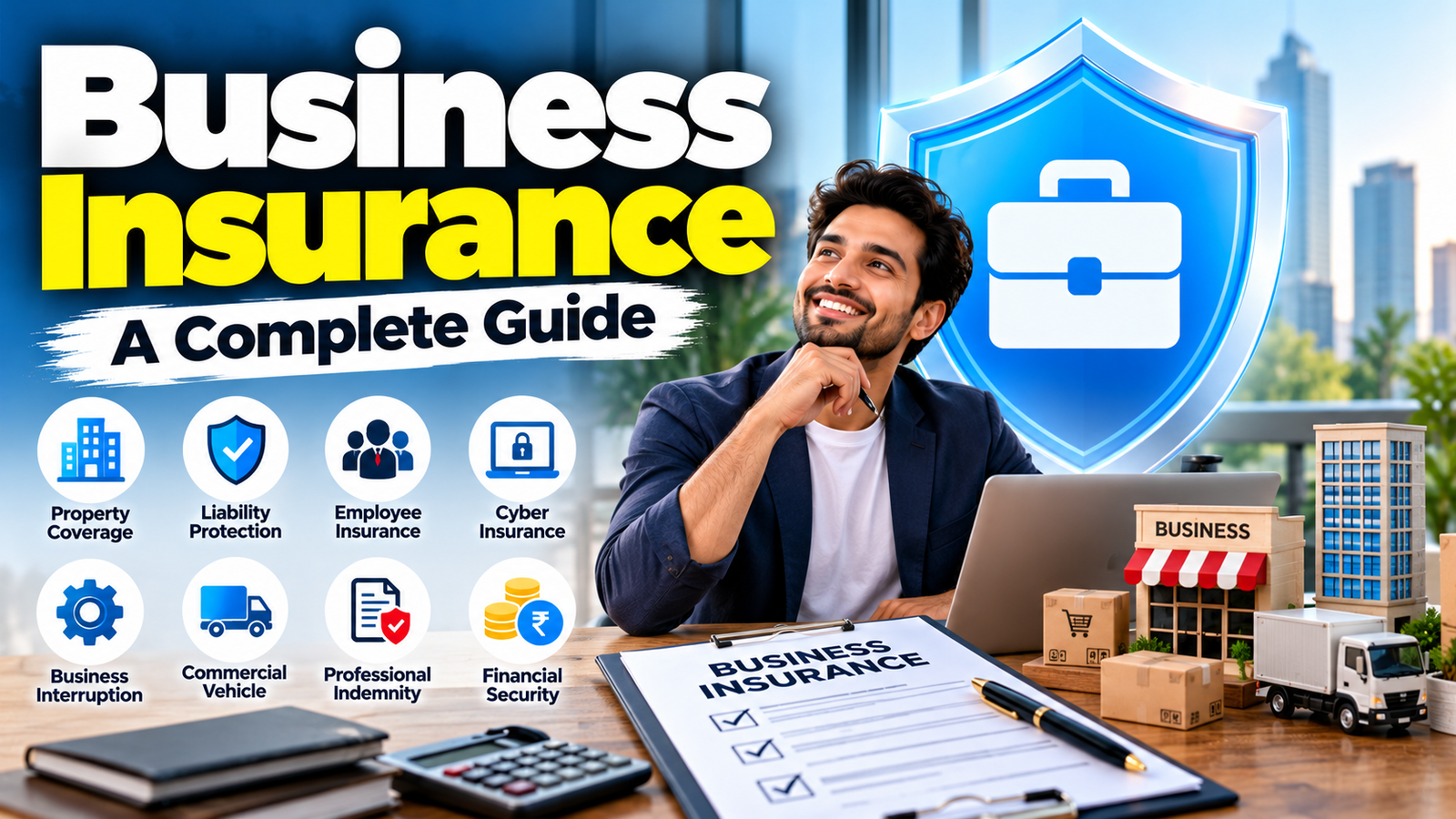
Running a business involves opportunities, responsibilities, and financial risks. Whether you own a small shop, operate an online business, manage a startup, or run a large company, unexpected events can disrupt your operations and cause significant financial losses. Fires, theft, property damage, lawsuits, employee-related incidents, cyberattacks, and business interruptions are some of the challenges that businesses may face.
Business insurance helps companies manage these risks by providing financial protection against specified losses. In exchange for a premium, an insurance company agrees to cover eligible claims according to the terms, limits, and exclusions of the policy.
Having appropriate business insurance can help protect company assets, support business continuity, and provide greater confidence when making important business decisions. It may also be required by law, contractual agreements, landlords, lenders, or clients, depending on the type of business and the coverage involved.
However, business insurance is not a single policy that covers every possible risk. Different businesses require different types of protection based on their industry, size, location, employees, and operations.
This guide explains what business insurance is, why it matters, the different types of coverage available, and how to choose a policy that meets your business needs.
What Is Business Insurance?
Business insurance is a category of insurance products designed to protect companies, business owners, and certain business-related activities against specified financial risks.
Depending on the policy, business insurance may cover physical assets, legal liabilities, employee-related risks, professional mistakes, cyber incidents, and losses caused by interruptions to business operations.
For example, imagine that a small retail store experiences a fire that damages its inventory, equipment, and interior. If the business has an appropriate property insurance policy covering the incident, the insurer may pay eligible repair or replacement costs, subject to the policy’s conditions and limits.
Similarly, a consulting company facing a covered professional negligence claim may receive financial protection through professional indemnity insurance.
Business insurance does not guarantee compensation for every loss. Coverage depends on the insured event, policy wording, applicable exclusions, deductibles, and the circumstances of the claim.
Why Is Business Insurance Important?
Business insurance plays an important role in protecting a company’s financial stability and long-term operations.
1. Protection Against Financial Losses
Businesses invest money in buildings, equipment, inventory, technology, and other resources. An unexpected event can damage these assets and create substantial replacement or repair expenses.
Insurance can help cover eligible losses, reducing the amount a business must pay from its own funds.
2. Legal Liability Protection
Businesses may be held legally responsible for injuries, property damage, or other harm caused to third parties. Defending against legal claims can be expensive, even when a business believes it has acted appropriately.
Depending on the policy, liability insurance may cover eligible legal defence costs, settlements, and damages.
3. Business Continuity
A serious incident can temporarily prevent a business from operating. During this period, the company may lose revenue while continuing to pay rent, salaries, loan instalments, and other expenses.
Business interruption insurance can help cover specified financial losses following an insured event, subject to its terms and waiting periods.
4. Building Customer and Partner Confidence
Clients, suppliers, landlords, and business partners may prefer working with companies that maintain suitable insurance coverage.
Some commercial contracts require proof of insurance before work begins. Having appropriate protection can therefore support business relationships and help companies qualify for certain opportunities.
5. Protection for Employees
Businesses with employees face responsibilities involving workplace safety, employee benefits, and compensation for certain work-related injuries.
Depending on local law and the policy, employee-related insurance can help businesses meet these obligations and manage associated financial risks.
6. Support for Long-Term Growth
Insurance can help businesses manage risks as they expand, hire employees, purchase equipment, enter new markets, or take on larger contracts.
Although insurance cannot eliminate business uncertainty, it can reduce the financial impact of certain unexpected events.
Types of Business Insurance
Different policies protect against different categories of risk. The following are some of the most common types of business insurance.
1. General Liability Insurance
General liability insurance protects businesses against specified third-party claims involving bodily injury, property damage, and certain personal or advertising injuries.
For example, if a customer slips and falls inside a shop and alleges that the business was responsible, general liability insurance may cover eligible legal expenses and liability payments.
This type of insurance can be useful for retail stores, restaurants, contractors, service providers, and businesses that interact with customers or visitors.
The exact coverage varies by policy, and general liability insurance does not normally cover every kind of professional error or business loss.
2. Commercial Property Insurance
Commercial property insurance protects eligible business property against covered events.
Depending on the policy, insured property may include:
- Office buildings and commercial premises.
- Furniture, machinery, and equipment.
- Computers and other electronic devices.
- Inventory, raw materials, and finished products.
- Certain fixtures and business contents.
For example, if a covered fire damages a warehouse and destroys inventory, property insurance may pay eligible repair or replacement expenses.
Businesses should check whether the policy covers replacement cost or depreciated value and whether specific risks, such as floods or earthquakes, require separate coverage or endorsements.
3. Professional Indemnity Insurance
Professional indemnity insurance, also known as professional liability insurance, protects eligible professionals and businesses against specified claims arising from professional negligence, errors, omissions, or failures in their services.
It can be relevant to consultants, accountants, architects, designers, technology service providers, and other professionals whose advice or work may cause financial losses for clients.
For example, if a client alleges that an incorrect professional recommendation caused a financial loss, the policy may cover eligible legal defence costs and liability payments.
Coverage depends on the policy’s definitions, exclusions, limits, and reporting requirements.
4. Workers’ Compensation and Employee-Related Insurance
Workers’ compensation insurance provides benefits for eligible work-related injuries or illnesses, where applicable under local law.
Depending on the jurisdiction, businesses may be legally required to maintain certain employee-related insurance or compensation arrangements.
In India, employers should understand their obligations under applicable labour and employee compensation laws. Depending on employee eligibility and the establishment, relevant arrangements may involve the Employees’ State Insurance framework or other statutory compensation requirements.
Employee health insurance and group personal accident insurance are separate products that may provide additional benefits.
5. Business Interruption Insurance
Business interruption insurance helps protect against specified income losses when an insured event temporarily disrupts normal operations.
For example, if a covered fire forces a restaurant to close while repairs are completed, the policy may cover eligible lost business income and certain continuing operating expenses.
Coverage usually depends on the insured event, the indemnity period, the calculation of financial losses, and any waiting period or policy limits.
It is important to understand that ordinary reductions in sales or losses caused by every possible disruption are not automatically covered.
6. Cyber Insurance
Cyber insurance helps businesses manage specified financial losses associated with cyber incidents and data breaches.
Depending on the policy, coverage may include incident response, forensic investigations, data recovery, legal assistance, customer notification expenses, and certain third-party claims.
Some policies may also cover eligible cyber extortion expenses or business interruption caused by a covered cyber event.
Cyber insurance is particularly relevant for online stores, software companies, digital agencies, financial service providers, and businesses that store customer information.
However, coverage can be affected by security requirements, exclusions, waiting periods, and the circumstances of the incident.
7. Commercial Vehicle Insurance
Businesses that use cars, vans, trucks, or other vehicles for commercial activities may need commercial motor insurance.
This coverage can protect against specified third-party liabilities and, where purchased, damage to insured commercial vehicles.
Businesses should ensure that their policies reflect the actual use of their vehicles. A personal motor policy may not provide the necessary coverage for certain commercial activities.
8. Product Liability Insurance
Product liability insurance protects businesses against specified claims involving injury or property damage allegedly caused by products they manufacture, distribute, or sell.
For example, a manufacturer may face a claim if a defective product causes an injury. Product liability insurance may cover eligible defence costs and liability payments.
This type of coverage can be important for manufacturers, wholesalers, importers, distributors, and certain retailers.
9. Directors and Officers Insurance
Directors and officers insurance, commonly called D&O insurance, provides protection against specified claims alleging wrongful acts by company directors or officers in their management roles.
Covered allegations may involve certain governance failures, misrepresentation, or breaches of duty, depending on the policy.
It can be particularly relevant to companies with boards, investors, external shareholders, or complex management structures.
D&O insurance generally contains exclusions and does not cover every form of misconduct or personal liability.
Benefits of Business Insurance
Business insurance offers several practical advantages.
Asset protection: It can help businesses repair or replace covered property damaged by insured events.
Risk management: Insurance transfers certain financial risks to an insurer in exchange for a premium, helping companies plan their finances more effectively.
Legal defence support: Applicable liability policies may cover eligible legal defence expenses and settlements.
Business continuity: Business interruption coverage can help manage certain losses when operations are disrupted by an insured event.
Contractual compliance: Appropriate coverage can help satisfy insurance requirements imposed by customers, landlords, lenders, or commercial partners.
Employee protection: Relevant insurance products can support employee-related obligations and provide additional workplace benefits.
Greater financial stability: Insurance can reduce the likelihood that a single covered incident will create an unmanageable financial burden.
What Does Business Insurance Not Cover?
Business insurance policies contain exclusions and conditions that determine when claims will not be paid.
Common exclusions or restrictions may include:
- Deliberate or fraudulent acts by the insured.
- Ordinary wear and tear or gradual deterioration.
- Certain pre-existing or previously known circumstances.
- Losses exceeding policy limits.
- Claims arising from activities excluded under the policy.
- Certain cyber incidents where required security conditions are not met.
- Business interruptions that do not result from an insured cause.
- Contractual liabilities that are not covered by the policy.
- Fines, penalties, or other expenses that are legally uninsurable.
Some policies also require prompt claim notification, accurate records, reasonable risk-prevention measures, and compliance with specified security standards.
Business owners should read policy documents carefully and disclose material information accurately when applying for coverage.
How to Choose the Right Business Insurance Policy
Selecting suitable coverage starts with understanding the risks associated with the business.
1. Identify Your Business Risks
List the risks your company could face, including property damage, customer injuries, professional errors, cyberattacks, employee injuries, and operational interruptions.
A manufacturing company may prioritise equipment, product liability, and workplace risks, while a digital agency may focus more on professional liability and cyber protection.
2. Assess Your Business Assets
Estimate the value of your buildings, equipment, inventory, furniture, and technology. Make sure the insured amounts are appropriate for the potential cost of repairing or replacing these assets.
Underinsurance can leave a business responsible for a significant portion of a covered loss.
3. Understand Legal and Contractual Requirements
Check whether applicable laws, employment arrangements, leases, licences, or customer contracts require specific types of insurance.
Requirements vary by jurisdiction, industry, and business activity, so businesses operating in India should verify the rules relevant to their circumstances.
4. Compare Coverage Limits and Premiums
Request quotes from multiple insurers and compare what each policy actually covers.
Look beyond the premium and examine deductibles, exclusions, sub-limits, waiting periods, claim conditions, and optional benefits.
The cheapest policy may not offer sufficient protection for the risks your business faces.
5. Review the Insurer’s Claim Process
Understand how claims are reported, what documentation is needed, how damage is assessed, and how long the process may take.
Review the insurer’s customer service arrangements and grievance procedures before purchasing a policy.
6. Consider Bundled Business Policies
Some insurers offer business owner packages that combine selected property, liability, and interruption coverages.
Bundled insurance may simplify policy management, but the included coverage and exclusions should be checked carefully. A package does not necessarily cover every business risk.
7. Review Coverage Regularly
Insurance needs change as a business grows. Hiring employees, acquiring equipment, moving premises, launching new products, or expanding into other markets may require adjustments to existing policies.
Review your coverage periodically and inform the insurer about material changes in business operations.
How Much Does Business Insurance Cost?
There is no single price for business insurance because premiums depend on the type and amount of coverage required.
Important pricing factors include the business’s industry, annual revenue, number of employees, location, property value, claims history, risk controls, and selected coverage limits.
For example, a small home-based consulting business may require a very different insurance package from a manufacturing facility with expensive machinery and a large workforce.
The best approach is to identify your major risks, obtain quotes from suitable insurers, and compare the protection offered against the cost.
Common Mistakes to Avoid
Business owners can improve their insurance decisions by avoiding several common mistakes.
First, do not assume that one policy covers every risk. Property insurance, professional liability, cyber insurance, and employee-related coverage address different exposures.
Second, avoid choosing insurance solely because it has the lowest premium. Inadequate limits or restrictive exclusions can result in substantial uncovered losses.
Third, do not underestimate the value of business assets. Insufficient coverage can leave the company unable to recover fully after a major incident.
Fourth, provide accurate information when applying for insurance and notify the insurer of material changes when required.
Finally, do not wait until a claim occurs to review your coverage. Understanding exclusions, reporting deadlines, deductibles, and documentation requirements in advance can help prevent avoidable disputes.
Conclusion
Business insurance is an important part of responsible business planning. It helps companies manage specified financial risks, protect valuable assets, address certain legal liabilities, and recover from covered disruptions.
The right combination of policies depends on the business’s size, industry, operations, assets, employees, and contractual obligations. While a small service provider may prioritise professional indemnity and cyber insurance, a manufacturer may need property, product liability, commercial vehicle, and employee-related protection.
Before purchasing coverage, identify your major risks, compare insurers, review policy limits and exclusions, and make sure the insurance reflects your actual business activities.
Business insurance cannot prevent every unexpected event or guarantee that every claim will be paid. However, carefully selected coverage can strengthen financial resilience, support business continuity, and provide a more secure foundation for long-term growth.